中文简体
中文简体 Search
 Contact

Consultation/Cooperation
010-68711086HR Line
010-62137913-8605 Publish Date:
 Visits:

Chai Qimin, Director of the Strategic Planning Department of the National Climate Strategy Center
GoldenBee:
Carbon peak and neutrality have become a new field for global
competition. How do you think the corporate actions, like building C
Team, will help Chinese enterprises develop in an ecology-first, green,
low-carbon and high-quality manner and improve their international
competitiveness? Chai:
With the challenges posed by carbon emissions, Chinese enterprises are
facing and will continue to face both internal and external pressures. On
the one hand, there are carbon border adjustment mechanisms, carbon
tariff policies, and technical standards for the carbon footprint of
products. If
Chinese enterprises do not speed up their efforts in improving
capabilities, they may be locked out of the global market in the future. On the other hand, China has pledged to peak carbon dioxide emissions by 2030 and achieve carbon neutrality by 2060 (China’s 30·60 Decarbonization Goal) and formulated policies to realize these goals. Accordingly, China has put forward a series of requirements for enterprises. Of course, a huge vessel takes more time to turn. Therefore,
the regulation of carbon emissions will start from energy-intensive
enterprises, such as those in electric, steel, petrochemical, chemical,
non-ferrous and building materials industries, and then gradually shift
to those in manufacturing and consumption sectors. I
think C Team has built a great platform for enterprises to raise their
awareness of carbon peak, carbon neutrality and sustainable development. In addition, other examples of sustainable development will also make enterprises realize that fulfilling the responsibility of decarbonization can generate win-win benefits. Green
and low-carbon development does not stand in opposition to economic
growth. Rather, it promotes high-quality and efficient development.
Realizing carbon peak and carbon neutrality is of great benefit to the
development of enterprises themselves.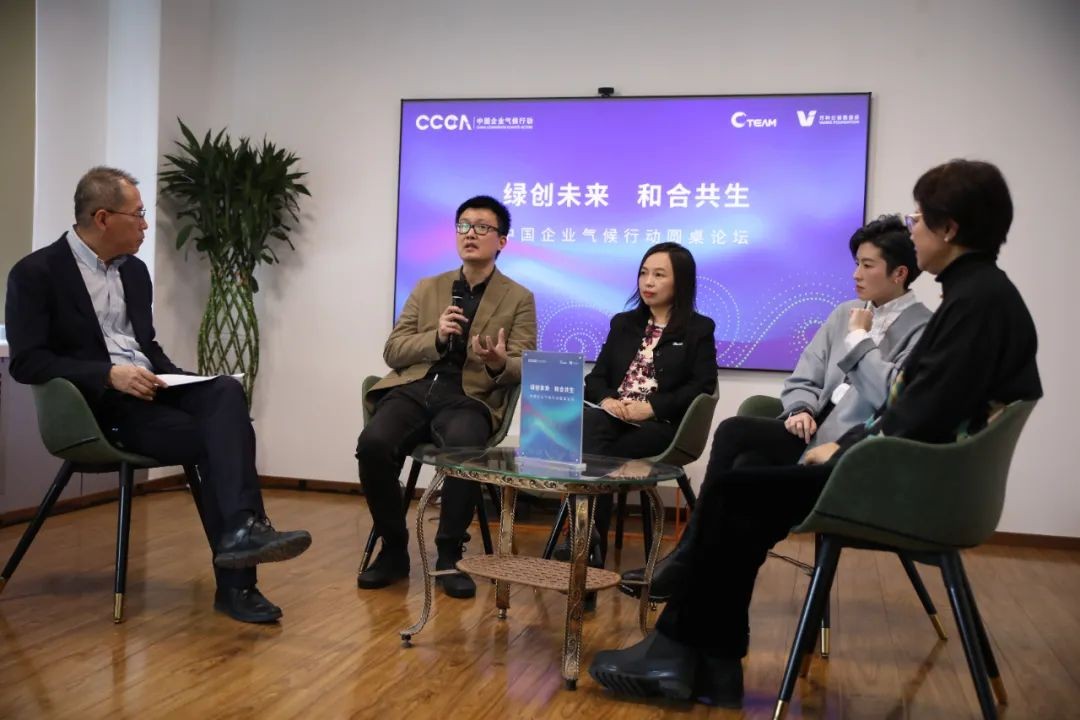
GoldenBee: You
were invited to participate in the special program of the TV show Day
Day Up—“new lifestyle under China’s 30·60 Decarbonization Goal”. We
often consider the entertainment of talk show as incompatible with the
seriousness of sustainability, but this show has been very successful in
spreading carbon peak, carbon neutrality and other sustainability
knowledge to the public. What enlightenment do you think this show has
provided for realizing 30·60 Goal? Chai: In
fact, I had only professional interviews from official media in the
past and rarely came into contact with such “variety show”. When
receiving the invitation for Day Day Up, we actually felt a little
apprehensive. But then I thought it’s important to broaden the communication channels. For
a long time, research on climate change and sustainable development has
been confined to the government and some of the enterprises, which is
far from enough. We need more extensive strength to realize 30·60 Goal and popularize the ecological civilization. First
of all, the industrial and production sectors are the main sources of
carbon emissions in China now; but with the improvement of people’s
living standards, people’s daily life and consumer goods will account
for most of the growth of carbon emissions in the future, which is
expected to be more than 70%. It is actually very important to know how
to manage emissions of daily consumption and form a green and low-carbon
lifestyle. In
addition, it still needs a long time to address climate change and
achieve sustainability. That means it may not be a one-generation
endeavor, but one that will take generations to produce effective
results.

I think we can spread the knowledge of decarbonization to more young people through Day Day Up. Perhaps one of the concepts and ideas mentioned on the show will plant a small seed in the minds of the audience, which will help them make efforts for decarbonization in their future work.
At the same time, more “down to earth” dissemination can also let the audience understand that the knowledge related to “carbon” is not that serious, but instead is very “fashionable”.
I was previously interviewed by a fashion magazine, and the host is a fashion supermodel and a graduate student from MIT Business School. I asked the host why a fashion pioneer was concerned about climate change, and the host answered, “Climate is a new sexy.” Climate change and sustainable development are new sexy fashions, so we should spread them to the public better. That’s our original aspiration.
Next article:“Six steps” in ESG risk management
Previous article:ESG involvement of global stock exchanges